Learn in seconds for FREE
B L O G P O S T S
This section is currently under development
Free 7-day courses
Explore our courses. Each one is a free 7-day course for beginners from age 14: about 20 minutes a day. Every day has four short parts: Imagine, Learn, Activity and a 3-question quiz. Day 7 is a small practical project. Everything is free.

English Communication: 4 Skills in 7 Days
Speak, listen, read and write with more confidence, at school, at home and later at work.
See the 7 days
- Day 1: Listening basics
- Day 2: Speaking clearly
- Day 3: Reading: main idea and details
- Day 4: Writing clear sentences
- Day 5: Listening and speaking together
- Day 6: Polite emails and requests
- Day 7: Project: introduce yourself

Operating a Computer: 7-Day Practical Basics
Use a computer with confidence: files, internet, email, documents, spreadsheets and staying safe.
See the 7 days
- Day 1: Meet the computer
- Day 2: Files and folders
- Day 3: Internet, search and email
- Day 4: Documents that look good
- Day 5: Spreadsheet basics
- Day 6: Staying safe
- Day 7: Project: hand in a mini project
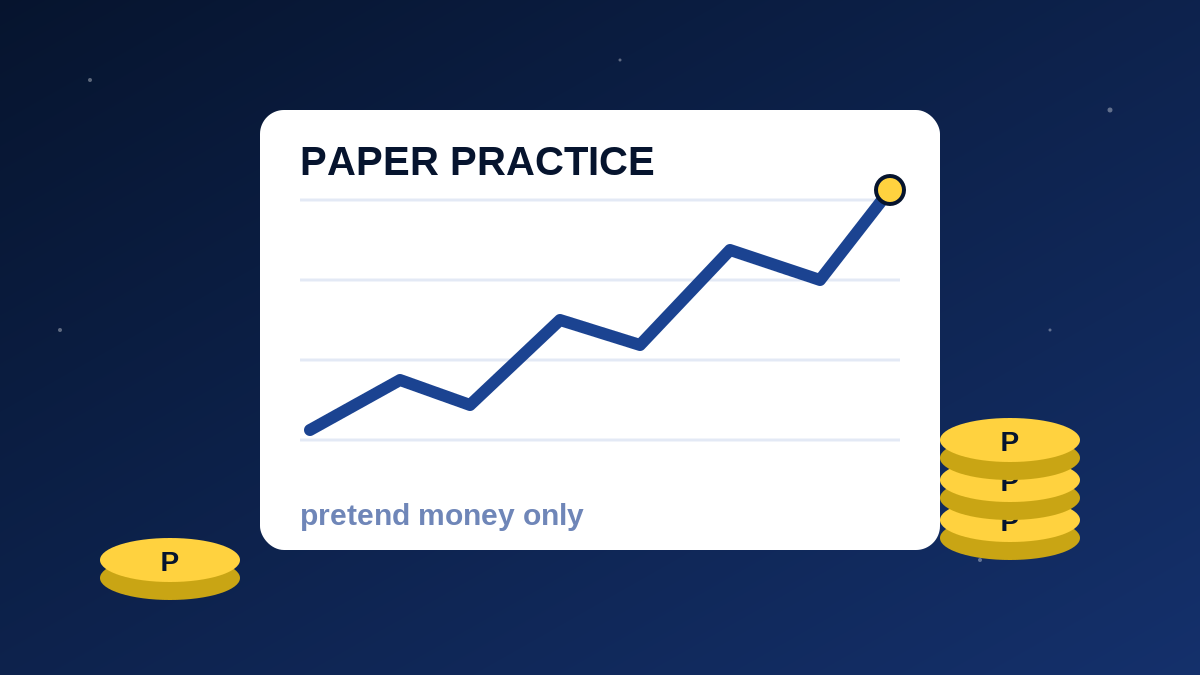
Fundamentals of Trading in Financial Markets
Understand how markets work, the main types of investments, orders, risk and how to spot scams.
Educational only. Not investment advice. No real trading: every exercise uses pretend money on paper. In most countries you must be 18 or older to open a trading account.
See the 7 days
- Day 1: What is a market?
- Day 2: Types of investments
- Day 3: Orders: how buying and selling works
- Day 4: Risk: protect your pretend money
- Day 5: Two ways to study a market
- Day 6: Feelings, rules and scams
- Day 7: Project: your paper-trading journal
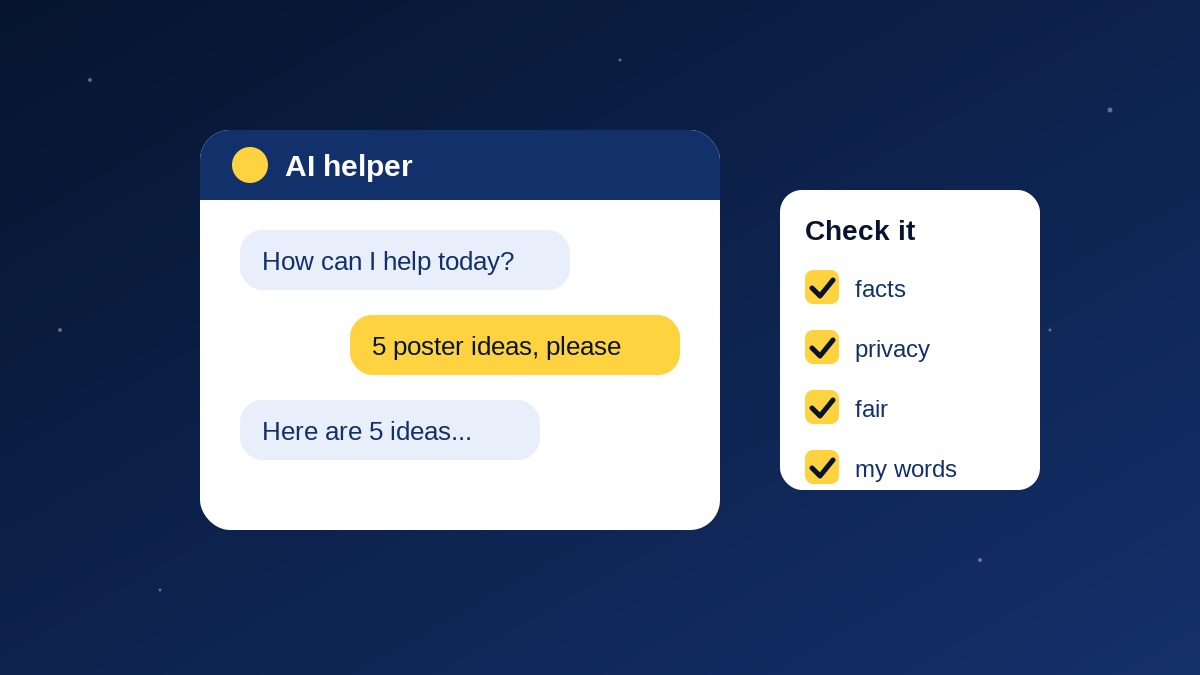
AI for Workplaces
Use AI tools well and safely for school and work tasks, and always check accuracy, privacy and fairness.
See the 7 days
- Day 1: What AI can and cannot do
- Day 2: Writing good prompts
- Day 3: AI as a writing helper
- Day 4: Summaries and checking facts
- Day 5: Privacy, safety and fairness
- Day 6: AI in your everyday tasks
- Day 7: Project: a club poster and email
ProEdge Academy
English Fundamentals for Business Communication, Grammar, Ethics, and Techniques Made Easy.
1. What is business communication?
Business communication is the sharing of information between people within and outside a company to achieve business goals.
2. Why is grammar important in professional writing?
Correct grammar ensures clarity, professionalism, and credibility in your written communication.
3. What is tone in communication?
Tone is the emotional quality or attitude in a message that affects how it is perceived by the reader or listener.
4. How do you write a professional email?
Use a clear subject line, polite greeting, concise body, and proper closing with your name and contact details.
5. What is the difference between formal and informal language?
Formal language is structured and respectful, used in business or academic settings; informal language is casual and personal.
6. What are ethics in business communication?
Ethics involves honesty, transparency, and respect when communicating within and outside a business.
7. How can miscommunication affect a business?
Miscommunication can cause delays, loss of trust, financial loss, and poor teamwork.
8. What is active listening?
Active listening means fully focusing, understanding, and responding thoughtfully to the speaker.
9. What is a communication barrier?
Anything that prevents effective communication, such as language, culture, noise, or misunderstandings.
10. What is clarity in communication?
Clarity means expressing ideas in a clear, concise, and understandable manner.
11. What are the 7 Cs of communication?
Clear, Concise, Concrete, Correct, Coherent, Complete, and Courteous.
12. What is an email signature?
An email signature includes your name, title, and contact information at the end of your email.
13. How do you address someone in formal communication?
Use titles and last names (e.g., Mr. Khan, Dr. Ahmed) unless invited to use first names.
14. What is plagiarism in communication?
Plagiarism is using someone else’s words or ideas without giving credit, which is unethical and unprofessional.
15. What is a professional report?
A professional report presents information in a clear, organized way for decision-making or analysis.
16. What is persuasive communication?
It is the use of words and tone to influence others to accept an idea or take action.
17. What is the importance of proofreading?
Proofreading ensures your message is error-free, professional, and easy to understand.
18. What is a memo?
A memo is a short internal communication used to convey information or updates in a workplace.
19. What is visual communication?
It is communication using visuals like charts, graphs, images, and videos to support or replace text.
20. What is constructive feedback?
It is helpful, respectful guidance intended to improve performance or behavior.
21. What is the difference between listening and hearing?
Hearing is passive; listening is active and requires attention and understanding.
22. What are idioms in business English?
Idioms are phrases with meanings different from literal words, like "hit the ground running" or "back to the drawing board."
23. What is a communication style?
A communication style is a preferred way of interacting with others, passive, aggressive, assertive, or passive-aggressive.
24. How can you improve business vocabulary?
Read professional content, use a thesaurus, and practice writing emails and reports regularly.
25. What is cross-cultural communication?
It’s communicating with people from different cultural backgrounds and understanding their communication norms.
26. What is the use of bullet points?
Bullet points make key information easy to read and understand quickly in lists or outlines.
27. What is a subject line in an email?
The subject line briefly describes the content or purpose of the email.
28. What are common email mistakes to avoid?
Typos, unclear subject lines, missing greetings, using slang, and sending without proofreading.
29. How should one deal with workplace conflict?
Stay calm, listen actively, communicate clearly, and seek a respectful resolution.
30. What is professionalism in communication?
Using respectful language, maintaining confidentiality, being punctual, and ensuring accuracy in all business messages.
ProEdge Academy
Education for All, Quick answers to your hottest fintech & crypto questions.
1. What is decentralized finance (DeFi)?
DeFi refers to blockchain‑based financial services, like lending, trading, and saving, delivered without traditional intermediaries such as banks.
2. What is blockchain?
A blockchain is a tamper‑resistant digital ledger where transactions are grouped into blocks, linked chronologically, and secured by cryptography.
3. What is Bitcoin?
Bitcoin is the first decentralized cryptocurrency, created in 2009 as a peer‑to‑peer electronic cash system powered by blockchain technology.
4. How has Bitcoin performed historically?
Despite high volatility, Bitcoin has grown from under US$1 in 2010 to tens of thousands of dollars, making it one of the best‑performing assets of the past decade.
5. What is Ethereum?
Ethereum is a blockchain platform that enables programmable smart contracts and hosts thousands of decentralized applications (dApps).
6. What is a smart contract?
A smart contract is self‑executing code on a blockchain that automatically enforces agreed‑upon rules once conditions are met.
7. What is tokenization?
Tokenization converts ownership of an asset, physical or digital, into tradable blockchain tokens, improving liquidity and accessibility.
8. What is staking?
Staking involves locking crypto in a proof‑of‑stake network to help secure it and earn rewards, typically paid in the same token.
9. What is yield farming?
Yield farming is moving crypto assets across DeFi protocols to earn the highest possible returns from interest, fees, or incentives.
10. What is an NFT?
A Non‑Fungible Token represents a unique digital item, like art or in‑game assets, whose ownership is verifiable on the blockchain.
11. What is a crypto wallet?
A wallet is software or hardware that stores your private keys and lets you send, receive, and manage cryptocurrencies.
12. What is a private key?
A private key is a secret alphanumeric code that proves ownership of blockchain assets; losing it means losing access to your funds.
13. What is futures trading?
Futures trading involves buying or selling contracts that obligate settlement of an asset at a set price and date in the future.
14. What is spot trading?
Spot trading is the immediate purchase or sale of an asset for on‑the‑spot delivery and settlement.
15. What is leverage?
Leverage lets traders amplify position size by borrowing funds, magnifying both potential gains and losses.
16. What is a margin call?
A margin call occurs when your collateral falls below required levels, forcing you to deposit more funds or have positions liquidated.
17. What is a crypto exchange?
An exchange is a digital marketplace where users trade cryptocurrencies for other cryptos or fiat money.
18. What is liquidity?
Liquidity measures how quickly an asset can be bought or sold without significantly impacting its price.
19. What is market capitalization?
Market cap equals a cryptocurrency’s current price multiplied by its circulating supply, indicating relative size.
20. What is volatility?
Volatility is the degree of price fluctuation over time, high volatility means rapid and large price swings.
21. What is diversification?
Diversification spreads investments across different assets to reduce overall risk.
22. What is dollar‑cost averaging (DCA)?
DCA involves investing a fixed amount at regular intervals, smoothing out the effects of market volatility.
23. What is technical analysis?
Technical analysis studies price charts and indicators to forecast future market movements.
24. What is fundamental analysis?
Fundamental analysis evaluates economic, financial, and project‑specific factors to determine an asset’s intrinsic value.
25. What is an order book?
An order book lists current buy and sell orders for an asset, showing market depth and liquidity.
26. What is slippage?
Slippage is the difference between expected and executed trade prices, often occurring in fast or low‑liquidity markets.
27. What are gas fees?
Gas fees are payments users make to compensate validators for processing transactions on networks like Ethereum.
28. What is proof of work (PoW)?
PoW secures a blockchain by requiring miners to solve complex puzzles, consuming energy to add new blocks.
29. What is proof of stake (PoS)?
PoS secures a blockchain by having validators lock up tokens and earn rewards for creating new blocks proportionally.
30. What is KYC?
Know Your Customer (KYC) is the process of verifying a user’s identity to prevent fraud, money laundering, and comply with regulations.
ProEdge Academy
AI & BI, Answering the Basics for Learners, Innovators, and Professionals.
1. What is Artificial Intelligence (AI)?
AI refers to machines or systems that simulate human intelligence, including learning, reasoning, and decision-making.
2. What is Business Intelligence (BI)?
BI is the process of analyzing business data to support informed decision-making, often using dashboards and reports.
3. How is AI used in BI?
AI enhances BI by enabling predictive analytics, natural language queries, and automated insights based on patterns in data.
4. What is machine learning?
Machine learning is a subset of AI that enables systems to learn from data and improve without being explicitly programmed.
5. What is deep learning?
Deep learning is a type of machine learning that uses neural networks with many layers to model complex patterns.
6. What is data science?
Data science combines statistics, programming, and domain knowledge to extract insights from structured and unstructured data.
7. What is a neural network?
A neural network is an AI model inspired by the human brain, made of layers of nodes that process data and learn relationships.
8. What is a chatbot?
A chatbot is an AI-powered program that interacts with users through natural language, simulating human conversation.
9. What is natural language processing (NLP)?
NLP enables machines to understand, interpret, and generate human language for tasks like translation and sentiment analysis.
10. What is computer vision?
Computer vision enables computers to understand and process visual information such as images or videos.
11. What is an algorithm?
An algorithm is a set of rules or steps followed by a computer to perform tasks or solve problems.
12. What is data mining?
Data mining is the process of discovering patterns, correlations, and trends in large datasets using statistical methods.
13. What is real-time analytics?
Real-time analytics provides immediate insights from live data streams, enabling rapid decision-making.
14. What is a dashboard in BI?
A dashboard visually displays key business metrics and trends using charts, graphs, and tables.
15. What is big data?
Big data refers to large, complex datasets that traditional tools cannot efficiently process or analyze.
16. What are KPIs?
Key Performance Indicators (KPIs) are measurable values that indicate how effectively an organization is achieving objectives.
17. What is supervised learning?
Supervised learning is an ML method where the model is trained on labeled data, learning from input-output pairs.
18. What is unsupervised learning?
Unsupervised learning finds hidden patterns in data without using labeled outcomes or supervision.
19. What is reinforcement learning?
Reinforcement learning is an ML technique where agents learn by interacting with an environment and receiving feedback.
20. What is AI bias?
AI bias occurs when algorithms produce unfair outcomes due to biased training data or assumptions.
21. What is robotic process automation (RPA)?
RPA uses software robots to automate repetitive business tasks, often combined with AI for smarter workflows.
22. What are AI ethics?
AI ethics involves the responsible use of AI, including fairness, privacy, transparency, and accountability.
23. What is a data warehouse?
A data warehouse is a central repository where large volumes of structured data are stored for reporting and analysis.
24. What is cloud-based BI?
Cloud BI delivers business intelligence tools and data analytics via cloud computing platforms, enabling scalability and accessibility.
25. What is an API?
An Application Programming Interface (API) allows different software systems to communicate and exchange data.
26. What is data visualization?
Data visualization represents data in graphical form, like charts and graphs, to make it easier to understand insights.
27. What is model training?
Model training is the process of teaching an AI system to recognize patterns in data to make accurate predictions.
28. What is model overfitting?
Overfitting occurs when an AI model learns training data too well but performs poorly on new data.
29. What are AI-powered BI tools?
These are tools like Power BI, Tableau, or Qlik enhanced with AI capabilities such as smart insights, predictive analytics, and automation.
30. How can AI transform business decision-making?
AI empowers faster, smarter decisions by uncovering hidden trends, predicting outcomes, and automating routine analysis.